
Satellite Images Reveal Iran Rebuilding Missile Sites Struck by Israel
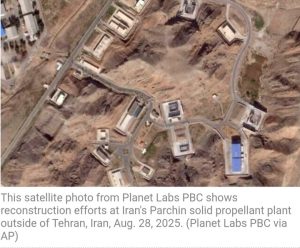
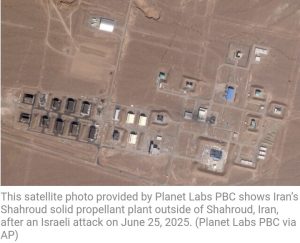
Fresh satellite imagery analyzed by the Associated Press suggests Iran has begun reconstructing missile-production facilities damaged in Israel’s 12-day war against the country in June. However, experts say a crucial element is still missing: the massive planetary mixers required to produce solid-fuel missiles.
For Tehran, reviving its missile program is a strategic priority. Officials see it as one of the few effective deterrents against Israel after the recent war left large parts of Iran’s air defense infrastructure in ruins. Missile experts believe Iran is working to re-acquire the mixers — especially before possible UN sanctions on its missile program are reinstated later this month.
Why the Mixers Matter
Planetary mixers, with blades that rotate like orbiting planets, are vital for properly combining solid fuel. Without them, missile production cannot return to pre-war capacity. Analysts say Iran has previously turned to China for such equipment and raw materials, raising concerns about renewed procurement from Beijing.
“If they manage to get planetary mixers again, the infrastructure is there to restart large-scale production,” noted Sam Lair of the James Martin Center for Nonproliferation Studies.
Sites Under Reconstruction
The AP report highlights activity at missile facilities in Parchin and Shahroud, where damaged mixing buildings are now being repaired. These were among several sites targeted by Israeli strikes in June, which appeared aimed at crippling Iran’s production bottlenecks.
Israel’s military strategy has focused on disrupting Iran’s ability to mass-produce solid-fuel missiles, which can be launched more quickly than liquid-fueled rockets and are harder to intercept.
Scale of Iran’s Arsenal
During the June conflict, Iran launched 574 ballistic missiles at Israel, in addition to 330 fired in earlier exchanges, according to the Jewish Institute for National Security of America. With an estimated stockpile of 2,500 missiles before the war, Tehran expended more than a third of its arsenal in just weeks.
Before the strikes, Iran was believed to have the capacity to manufacture over 200 solid-fuel missiles monthly. Analysts argue that if Tehran overcomes its current mixing limitations, production could quickly surge back to those levels.
Links to China and Syria
Concerns also extend beyond Iran’s borders. Israeli military footage has revealed a planetary mixer at a Syrian missile plant linked to Iran, resembling models sold by Chinese companies. Meanwhile, U.S. officials have already sanctioned Chinese firms accused of supplying Iran with propellant chemicals.
While Beijing has not confirmed any such transfers, Chinese officials have reiterated their support for Iran’s sovereignty while voicing concern over escalating regional tensions.
The Bigger Picture
Iran’s defense minister, Gen. Aziz Nasirzadeh, recently announced new missile models with advanced warheads, underscoring Tehran’s determination to press forward. Analysts warn that if Iran restores its pre-war production rate, Israel will face mounting challenges in preemptively destroying missiles or intercepting them once launched.
“They’re deeply invested in this program,” Lair said. “And I don’t believe they will ever put it on the negotiating table.”
Iran. Always iran
iran