
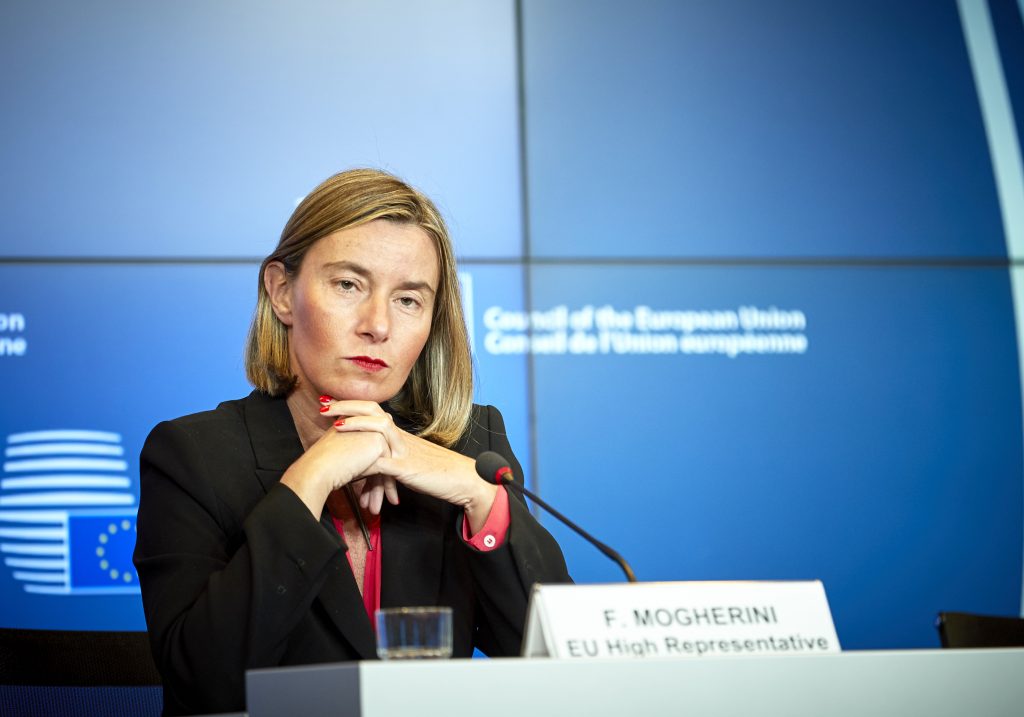
Former European Union High Representative Federica Mogherini has been formally charged in a widening fraud and corruption investigation led by the European Public Prosecutor’s Office (EPPO). The case, which has shaken Brussels, centres on allegations of procurement fraud, corruption, conflict of interest, and misuse of confidential information during the awarding of a major EU diplomatic training contract.
Belgian police carried out coordinated raids this week at the European External Action Service (EEAS) headquarters in Brussels, the College of Europe campus in Bruges—where Mogherini currently serves as rector—and the private residences of several individuals linked to the case.
Authorities say the raids were triggered by evidence suggesting that confidential information from inside the EEAS may have been improperly shared during a 2021–2022 public tender process for an EU-funded diplomatic training programme, later awarded to the College of Europe.
Who Else Is Under Investigation?
Alongside Mogherini, investigators questioned:
-
A senior former EEAS official believed to have played a key role in the tender process
-
A high-ranking manager at the College of Europe connected to the training programme
-
Additional administrative staff who may have had access to non-public procurement documents
After hours of interviews, all suspects were released but remain formally charged and subject to ongoing judicial oversight. EPPO clarified that none are currently considered flight risks.
Serious Allegations but Presumption of Innocence
The EPPO alleges that certain bidders in the tendering process may have had privileged access to classified information, giving them an unfair advantage and potentially influencing the outcome of the contract award. If proven, this would constitute a breach of EU procurement law and conflict-of-interest rules.
Mogherini and the other suspects have denied wrongdoing, and their legal teams insist they will cooperate fully with investigators. Under EU law, all defendants are presumed innocent until a court reaches a verdict.
This case has quickly become one of the most high-profile corruption investigations in recent EU history. For the EPPO—established to protect the EU’s financial interests—the probe represents both a crucial test of institutional credibility and a rare challenge involving top-level political figures.
Analysts say the scandal raises deeper questions about governance, transparency, and oversight within EU institutions, particularly when former officials transition into influential academic or administrative roles connected to EU-funded programmes.
The investigation is expected to continue in the coming weeks as prosecutors analyze seized documents, financial records, and communications. A preliminary court hearing is anticipated, though a trial date has not yet been set.
The College of Europe released a brief statement expressing “full confidence in the legal process,” while the EEAS has declined detailed comment, citing the ongoing investigation.
For now, Brussels remains on edge as the probe unfolds—with significant implications for EU accountability and the careers of those involved.