


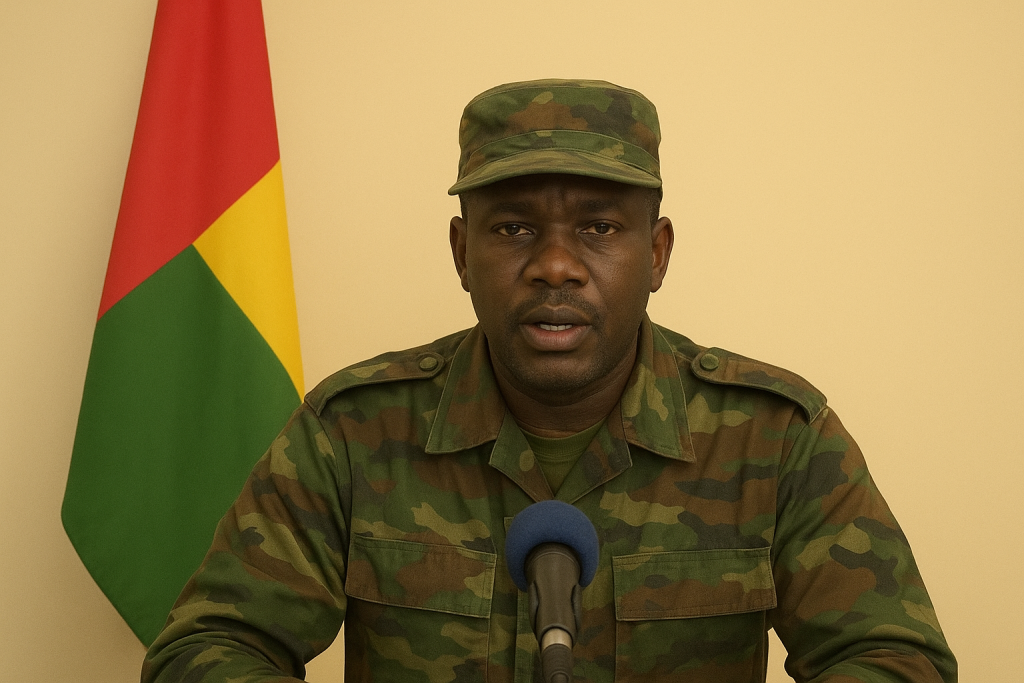
Guinea-Bissau has entered a new period of political uncertainty after a group of senior military officers announced on 26 November 2025 that they had taken control of the country, dissolving the elected government and suspending national institutions.
The takeover declared on state television came just three days after Guinea-Bissau’s hotly contested presidential and legislative elections. Official results had not yet been released when the military intervened.
Gunfire was reported earlier in the day near the presidential palace, the interior ministry and the headquarters of the national electoral commission in the capital, Bissau. Hours later, a uniformed spokesperson appeared on air declaring that the armed forces had assumed “total control” of the state.
The officers announced the formation of a ruling body called the High Military Command for the Restoration of National Security and Public Order. Borders were immediately closed, an overnight curfew was imposed, and all media operations were suspended until further notice.
President Umaro Sissoco Embaló was reported to have been detained in the early hours of the takeover. His exact location remains unclear.
The most visible figure in the takeover is Denis N’Canha (also known as Dinis Incanha/Diniz N’Tchama), the head of the presidential military office. According to the junta, the intervention was necessary to “prevent manipulation of electoral results” and “stop an attempted destabilization plan.”
The officers insisted that their move was not a power grab but a “corrective” measure to protect national stability. They stated that they would govern until further decisions are announced, without offering a timeline for a return to civilian rule.
The coup unfolded amid a tense electoral climate. Both the incumbent president and an opposition figure, widely identified as Fernando Dias, had prematurely declared victory even before the national electoral commission released results. Analysts say the clashing declarations raised fears of post-election unrest.
Guinea-Bissau has a long history of political instability and military interference in governance, with several coups and attempted coups occurring since independence.
The military takeover has prompted swift reactions from regional bodies and international governments:
-
ECOWAS and the African Union condemned the seizure of power, calling it a “serious breach of constitutional order” and demanding the immediate release of detained officials.
-
Election observer missions also expressed concern, warning that the coup undermines democracy and regional stability.
-
Ghana denounced the move as an unconstitutional overthrow and urged a rapid return to democratic governance.
-
Nigeria voiced similar concerns, emphasizing the need to safeguard democracy and protect foreign nationals and observers still in the country.
-
Other countries in West Africa are monitoring the situation amid fears that another unconstitutional change of government could deepen political instability in the region.
The junta has not provided details about how long it intends to remain in power or when—if at all—it plans to restore democratic institutions. The suspension of borders, media activity and the electoral process raises concerns about civil liberties and humanitarian conditions.
Observers warn that Guinea-Bissau’s future will depend heavily on negotiations between the military, political actors, civil society, and regional power blocs. International pressure is expected to increase in the coming days.
For now, the nation remains on edge as citizens await clarity on the fate of their government and the path forward.