
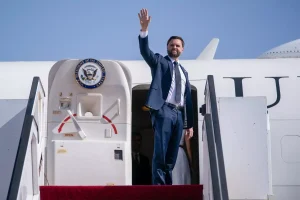
When U.S. Vice President J.D. Vance concluded his recent visit to Israel, his parting words made headlines as much as his diplomatic meetings.
Standing before reporters at Ben Gurion Airport, Vance didn’t mince words about a vote that had just taken place in the Israeli Knesset — calling it “a very stupid political stunt” and saying he took “personal insult” to it.
His reaction wasn’t just a passing outburst.
It reflected deep frustration within the U.S. administration and a moment of tension in the otherwise steadfast U.S.–Israel alliance.
What Happened in the Knesset
During Vance’s visit — which focused on strengthening the fragile Gaza cease-fire and reaffirming U.S.–Israel cooperation — Israeli lawmakers held a preliminary vote on a bill to apply Israeli civil law to parts of the occupied West Bank.
The bill, introduced by far-right opposition members, passed narrowly (25–24) in its first reading.
Though it had little chance of becoming law, it carried enormous symbolic weight.
For Palestinians and much of the international community, such a vote signals steps toward formal annexation — a move widely seen as illegal under international law and destabilizing in the current climate.
Importantly, the measure did not have the backing of Prime Minister Benjamin Netanyahu or the governing coalition, which viewed it as a provocation at a delicate diplomatic moment.
For the U.S., timing was everything.
Vance had flown to Israel as part of the Biden-Trump administration’s broader effort to consolidate a Gaza cease-fire following months of renewed fighting between Israel and Hamas.
His message during the visit was clear: Washington supports Israel’s security and sovereignty — but within boundaries that keep peace efforts alive.
Then came the Knesset vote.
From Washington’s perspective, it was not only politically tone-deaf but potentially destructive to the painstaking diplomatic progress made in Gaza.
By holding the vote during a U.S. vice-presidential visit, Israeli lawmakers had inadvertently embarrassed an American ally who was publicly defending Israel’s legitimacy and security.
So when reporters asked for Vance’s thoughts, he didn’t hold back.
“If it was a political stunt, it was a very stupid political stunt,” he said. “And I personally take some insult to it.”
He went on to reaffirm that U.S. policy opposes any unilateral annexation of the West Bank, reiterating Washington’s stance that final borders must be determined through negotiation — not parliamentary maneuvering.
The West Bank issue sits at the heart of Israeli-Palestinian tensions.
Even symbolic gestures toward annexation tend to inflame regional tempers, jeopardize fragile truces, and invite backlash from Arab allies the U.S. has been courting to stabilize the region.
For Vance, who has tried to balance America’s unwavering support for Israel with a message of pragmatic diplomacy, the vote threatened to undo that balance.
His choice of words — blunt and undiplomatic by design — signaled a warning: America’s patience with political grandstanding in Jerusalem is limited.
It was also a subtle message to both sides of the political divide in Israel:
The U.S. will stand with Israel’s people, but not necessarily with every political move made in the Knesset.
.