


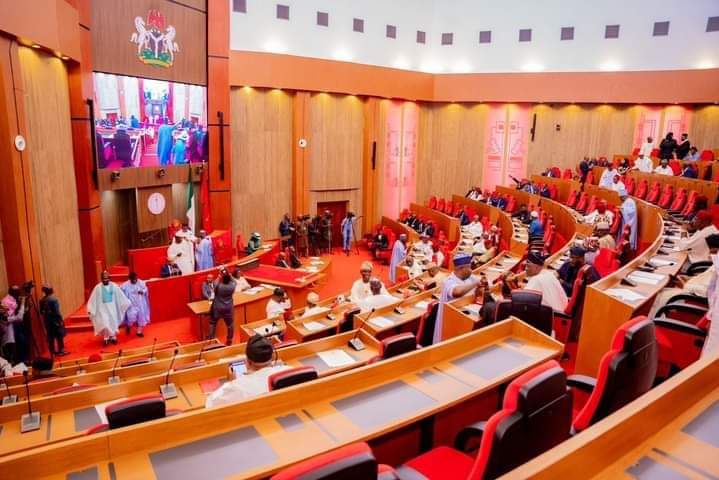
The National Assembly has issued a strong call to the Federal Government, urging it to publicly identify, sanction, and prosecute individuals and organizations financing terrorism, banditry, and kidnapping across Nigeria.
The resolution, adopted during a House of Representatives plenary session on December 3, 2025, comes in response to an alarming surge in abductions and violent attacks nationwide.
Lawmakers argued that the time has come for transparency and decisive action against those fueling the country’s worsening security crisis. The House urged the government to “name and shame” terrorism sponsors and ensure their prosecutions are carried out in an open and expedited manner.
Push for Special Court and Tougher Enforcement
In addition to naming terrorism financiers, the House called for the establishment of a special court dedicated to handling terrorism, banditry, and kidnapping cases. This, according to lawmakers, would help ensure faster trials, reduce bottlenecks, and strengthen Nigeria’s criminal-justice response to insecurity.
The lawmakers also demanded strict enforcement against illegal arms trafficking, the proliferation of weapons, and the shadow financial networks that sustain violent groups.
Although the Federal Government has previously named several terrorism financiers – including 15 individuals and multiple Bureau-de-Change operators in 2024, lawmakers insist that more revelations are necessary.
In earlier statements, government officials confirmed that intelligence agencies have been tracing money flows behind insurgency and criminal gangs. Presidency sources also disclosed that additional financiers may soon be publicly named, as part of a broader counter-terrorism financing crackdown.
Furthermore, the FG has claimed that over 100 terrorism financiers have been prosecuted and convicted in the past two years, reflecting what it describes as a major stride in dismantling terror networks.
Security analysts say the National Assembly’s renewed push reflects growing public frustration over worsening insecurity. While security forces continue to arrest insurgents and bandits, lawmakers insist that cutting off the financial pipelines is crucial to weakening these groups.
Naming and prosecuting financiers, they argue, will:
-
Increase transparency and public confidence
-
Help deter future funding channels
-
Disrupt the financial backbone of violent gangs
-
Signal stronger political will against terrorism
While many Nigerians welcome the demand, analysts also highlight several challenges. Terror financing networks often involve complex, cross-border transactions, coded channels, and covert operatives. There is also concern about balancing public disclosure with due legal process to avoid wrongful accusations.
Still, the National Assembly insists that silence is no longer an option.
The House resolution will be transmitted to the Executive for action. If adopted, Nigeria could see a fresh wave of disclosures, arrests, prosecutions, asset seizures, and broader financial-intelligence operations.
As insecurity continues to escalate, all eyes are now on the Federal Government to determine whether it will act swiftly — and openly — to expose those bankrolling violence in the country.