


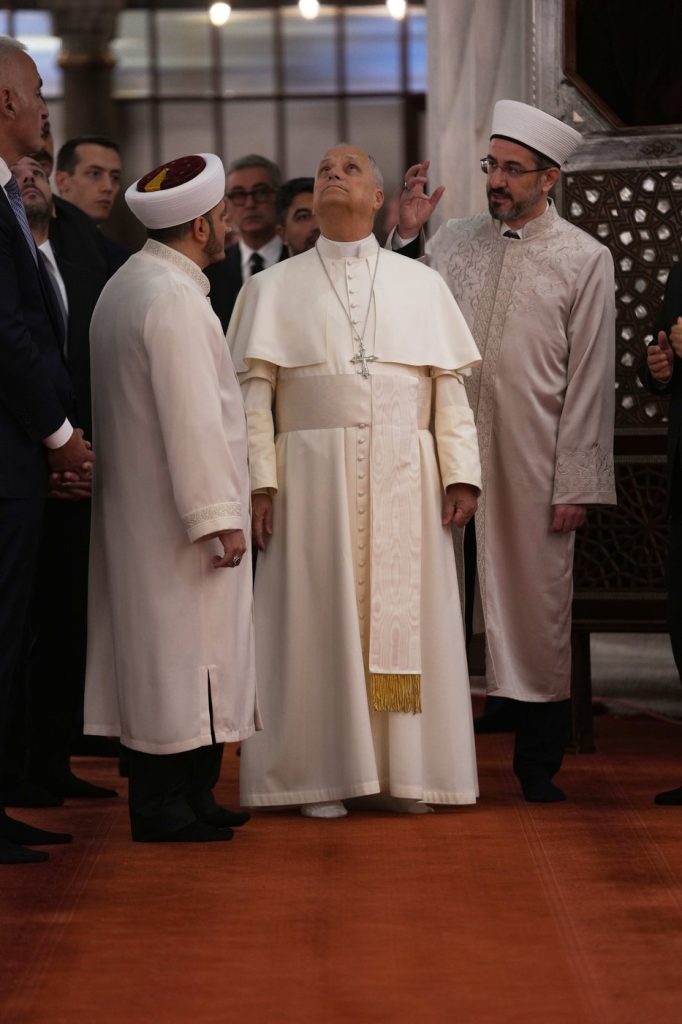
In late November 2025, Pope Leo XIV embarked on his first foreign trip since his election in May — and chose Türkiye (Turkey) as his destination. The journey, timed to coincide with the 1,700th anniversary of the First Council of Nicaea (held in what is now modern-day İznik), carries deep symbolic weight for Christians worldwide. But beyond the commemoration, the trip is being widely read as a bold statement of interfaith respect, Christian unity, and hopes for peace in a fractured world.
Key Stops & Moments on the Itinerary
-
Arrival in Ankara: The trip began with a visit to Turkey’s capital, where the Pope met political leaders and restated the importance of dialogue, pluralism, and religious diversity.
-
Pilgrimage to İznik (Nicaea): On November 28, Pope Leo traveled to İznik for a commemorative service marking the 1,700-year anniversary of the First Council of Nicaea — the historic gathering that produced the Nicene Creed, a foundational declaration of Christian belief accepted across Catholic and Orthodox traditions.
-
Visit to the Sultan Ahmed Mosque (Blue Mosque) in Istanbul: On November 29, the Pope made his first-ever visit as pontiff to a Muslim house of worship. He entered the mosque in white socks (after removing his shoes), as a sign of respect. But notably — unlike some of his predecessors — he did not stop to pray; instead, he walked through the mosque in a contemplative, respectful silence.
-
Meetings with Christian Communities and Leaders: Following the mosque visit, Pope Leo held private meetings with Christian leaders from various traditions, including Syriac Orthodox communities. An ecumenical service was planned at the seat of the world’s Orthodox Christians — a gesture underscoring a commitment to Christian unity amid centuries of division.
-
Mass for Turkey’s Catholic Minority: The trip also included a public mass for Turkey’s small Catholic population — a rare and symbolic affirmation of their place in Turkey’s religious tapestry.
What the Visit Symbolizes — and Why It Matters
Interfaith Respect and Dialogue
By entering the Blue Mosque (a major Muslim place of worship) removing his shoes, observing in silence Pope Leo XIV signalled openness, respect, and a willingness to listen. Though he did not pray, the visit echoes a long tradition of papal outreach to Muslim communities while maintaining Christian identity.
Christian Unity Across Traditions
The pilgrimage to İznik for the Council of Nicaea anniversary followed by shared prayer with Orthodox and other Christian leaders underscores the Pope’s emphasis on bridging centuries-old divides between Catholic and Orthodox branches of Christianity. For many, this may be among the most meaningful gestures of this trip.
Türkiye as Bridge Between Faiths and People
Pope Leo framed Turkey not just as a destination, but as a “bridge of civilizations” a place where Christian history, Islamic tradition, and modern secular governance intersect. Given ongoing global conflicts and growing polarization, that framing carries heavy geopolitical and moral weight.
A Message at a Time of Global Instability
Against the backdrop of conflict in the Middle East, wars, and religious tensions worldwide, the Pope’s visit arrives as a call for peace, mutual respect and interreligious harmony. In his speeches and actions, he positioned Türkiye as capable of being a “source of stability” not just for itself, but for a troubled region.
Reactions, Expectations & What’s Next
-
Many Christians in Turkey — a small minority in a predominantly Muslim nation — expressed optimism. The visit brings renewed visibility, affirmation, and hope for better interchurch cooperation and broader societal acceptance.
-
Some observers see the Pope’s balanced approach — absence of formal Muslim prayer, but respectful presence in a mosque — as a careful diplomatic gesture: promoting respect without compromising Christian identity.
-
The joint ecumenical prayers and meetings set expectations for future cooperation between Catholic and Orthodox churches; many in the religious world view this as a potential turning point in long-standing divisions.
-
On the international stage, the visit may influence how Türkiye is viewed: not just as a regional power, but as a potential facilitator of peace, religious tolerance, and inter-faith diplomacy — especially relevant given contemporary conflicts across the Middle East and Europe.
For the global Christian community — Catholic, Orthodox and otherwise — and for Muslim-Christian relations in particular, this visit may mark the beginning of a renewed chapter: one in which mutual respect, humility, and dialogue become as important as doctrine.
For Türkiye, the visit comes at a time when it seeks to reaffirm its role as a cultural and religious crossroads between East and West — a role with growing significance in a world yearning for bridges instead of walls.