
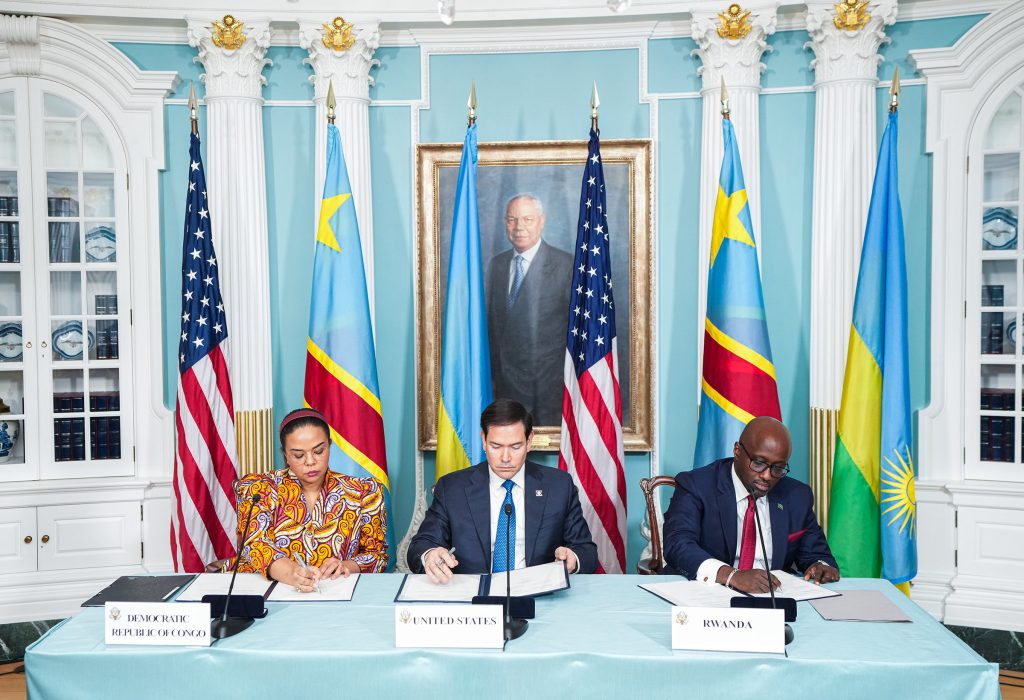
In a major diplomatic development, the White House has confirmed that U.S. President Donald J. Trump will host the presidents of the Democratic Republic of the Congo (DRC) and Rwanda for the signing of a landmark peace and economic agreement on December 4, 2025. The ceremony is set to bring together DRC President Félix Tshisekedi and Rwandan President Paul Kagame, marking what U.S. officials have called a “historic step toward long-term stability” in Central Africa.
The agreement being formalized builds on a preliminary pact signed in June 2025 by the countries’ foreign ministers. That earlier framework negotiated with strong U.S. mediation outlined commitments to de-escalate military tensions, address armed group activity, and promote regional economic cooperation after years of strained relations and violence in eastern Congo.
Washington has been heavily involved in the process, with Trump’s administration pushing for what it calls “a new era of security and development” in a region long plagued by conflict, displacement, and competition over mineral-rich territories.
Key Provisions of the Agreement
According to negotiators and publicly available summaries, the agreement centers on four major pillars:
-
Respect for Sovereignty & Territorial Integrity: Rwanda agrees to withdraw troops and halt support for armed groups in eastern Congo, while the DRC commits to addressing anti-Rwandan militias operating inside its borders.
-
Disarmament of Armed Groups: Both nations will back a structured demobilization and reintegration process for non-state fighters fueling instability across the region.
-
Economic Integration & Development: The pact includes a framework for joint economic initiatives particularly in mining, cross-border trade, and infrastructure aimed at transforming conflict zones into economic corridors.
-
Joint Security Monitoring: A U.S.-supported mechanism will track troop withdrawals, humanitarian access, and ceasefire compliance, ensuring transparency and accountability.
Why This Matters
Eastern DRC remains one of the world’s most troubled regions, with decades of violence involving militias, rebel groups like M23, and cross-border tensions between Kinshasa and Kigali. The conflict has displaced millions and stunted development in a region rich in global-critical minerals including cobalt, coltan, lithium, and copper.
A successful peace deal would not only ease regional tensions but also reshape the geopolitical and economic landscape of Central Africa. It could create safer conditions for investment, stabilize mining supply chains, and reduce humanitarian crises that have persisted for generations.
Despite optimism from Washington, analysts warn that implementation will be challenging. Previous peace efforts have collapsed due to mistrust, slow troop movements, and the resilience of armed groups operating deep within remote terrain. Human rights advocates also caution that economic interests must not overshadow the need for accountability and justice for victims of war crimes.
Still, the upcoming Washington signing marks the most significant diplomatic engagement between the two nations in years and places the U.S. squarely at the center of efforts to broker peace in the Great Lakes region.
Following the December 4 signing, experts expect months of coordination around disarmament schedules, troop withdrawals, humanitarian access, and economic planning. International observers will closely watch whether the agreement translates into real progress on the ground.
For now, all eyes turn to the White House, where Trump will oversee a ceremony that could signal the beginning of a new chapter for two nations long locked in conflict and for the wider region hoping for lasting peace.