

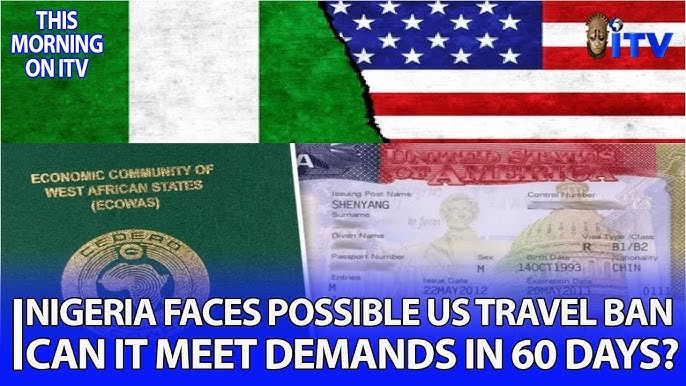

In a significant shift in U.S. immigration policy, the United States government has expanded its travel restrictions to include Nigeria among a growing list of countries facing partial limitations on entry. The decision, announced in a presidential proclamation on December 16, 2025, marks a notable development in visa and travel policy with implications for Nigerian nationals planning travel to the U.S. in the coming year.
Under the updated proclamation, Nigeria has been placed on the list of countries subject to partial travel restrictions, meaning certain immigrant and non-immigrant visa categories — including business (B-1), tourism (B-2), student (F/M), and exchange (J) visas — will be suspended or limited for new applicants who remain outside the United States.
What the Restrictions Mean for Nigerians
The partial restrictions do not constitute a full travel ban, but they do significantly tighten U.S. entry criteria for Nigerian citizens without valid visas. Individuals already in possession of valid visas or lawful permanent residents are generally exempt from these new measures.
According to a White House fact sheet, the U.S. administration cited a range of security and screening concerns in its rationale for the expanded restrictions. Among these are challenges in vetting and information-sharing linked to extremist activity within Nigeria, including the presence of groups such as Boko Haram and Islamic State affiliates, and comparatively high rates of visa overstays among Nigerian travelers.
The inclusion of Nigeria comes as part of a broader enlargement of U.S. travel restrictions that now affects dozens of nations worldwide. The expanded list includes countries facing full bans — such as Syria, South Sudan, and Mali — as well as others facing partial restrictions alongside Nigeria, including Senegal, Tanzania, and Angola.
The new measures are set to take effect on January 1, 2026, giving prospective travelers and consular officials time to adapt to the updated rules.
The announcement has drawn attention from legal experts, advocacy groups, and travel stakeholders, some of whom argue that the policy unfairly targets countries based on nationality rather than individual risk. Others have underscored the administration’s stated objective of tightening security and strengthening vetting procedures.
For Nigerians seeking U.S. visas, experts recommend close coordination with immigration attorneys and careful review of travel plans, especially for students, workers, and families planning to travel in early 2026.