
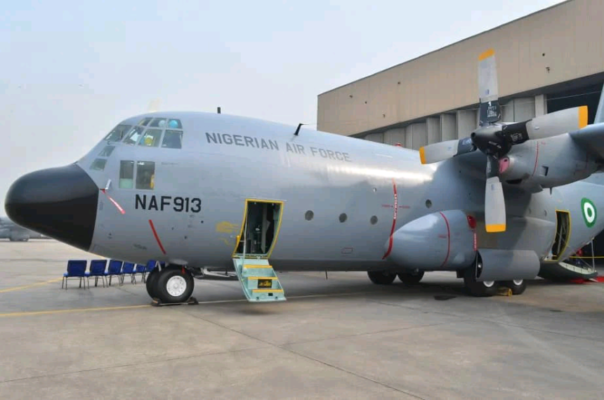
On 8 December 2025, a military transport aircraft belonging to the Nigerian Air Force (NAF) — identified as a C-130 cargo plane made an unscheduled landing in the city of Bobo‑Dioulasso, in Burkina Faso. What began as a reported technical or medical emergency quickly escalated into a serious diplomatic confrontation after the landing was denounced by the Alliance of Sahel States (AES) as a breach of national sovereignty.
Emergency Landing or Unauthorized Entry?
According to official statements from AES; the regional military alliance now publicly led by the junta in neighboring Mali ; the Nigerian aircraft entered Burkinabé airspace without prior authorization, then landed “illegally” at Bobo-Dioulasso. The alliance said the plane and its occupants were detained while authorities investigate the circumstances. AES has reportedly placed its air and anti-air defenses on full alert, and issued a warning that any future unauthorized attempted entry would be met with “neutralization.”
On the other hand, Nigerian officials and some media outlets have described the landing as the result of an in-flight emergency possibly mechanical or medical emphasising that the safety of the crew and passengers was their priority, and asserting that no hostile intent motivated the diversion.
The incident has struck a nerve in an already fragile regional environment. The AES reaction underscores the sensitivity to perceived foreign military presence particularly from Nigeria amid ongoing contention over regional interventions, sovereignty, and alliances.
Burkina Faso’s strong response signals a warning to neighbouring and foreign military forces against recurring or unannounced aerial operations inside its airspace. The standoff also raises larger questions about military coordination, air-traffic protocols, and diplomacy in West Africa, where civil and military rule remains fragile in multiple states.
As of this writing, both sides appear committed to investigation; AES seeking to determine whether the landing truly stemmed from an emergency or mask deeper motives; Nigeria likely to insist on a benign explanation, anchored in duty of care for its personnel.
Observers suggest the way the two governments handle the aftermath could have lasting implications: a peaceful resolution might rely on official apologies, clarification of flight protocols, and renewed diplomatic dialogue. A more confrontational approach — or any further unsanctioned flights — could escalate tensions, potentially triggering wider regional polarization.